Back Post Treble Crochet

Back Post Treble Crochet

Published:

The back post treble crochet stitch is an advanced yet beginner-friendly way to create recessed textures and three-dimensional patterns in your crochet projects. With consistent tension, careful hook placement, and practice combining BP TR with FP TR, you can craft professional-looking designs like basket weave, cables, and ribbing. Mastery of this stitch enhances the visual depth of your projects and allows for more complex, visually striking crochet patterns.

Download PDF Stitch Tutorial

35% Raverly Sale

No code needed
USE CODE
Promotion ends :
35% OFF On all Ravelry patterns ** This promotion is only valid on Stouto Creative Crochet Stores

Beginner’s Guide to the Back Post Treble Crochet Stitch (US: BP TR, UK: BP DTR)

The back post treble crochet stitch is a tall, textured stitch that creates recessed vertical lines, forming a “valley” effect in your crochet fabric. In US terminology, it is called BP TR, while in the UK it is referred to as BP DTR (Back Post Double Treble).

This stitch is worked around the post of the stitch from the previous row, inserting the hook from the back of the fabric. BP TR is often used in basket weave patterns, cables, ribbing, and other textured designs to create depth and contrast with front post stitches.

For beginners, learning BP TR is a great way to achieve advanced textured effects and enhance three-dimensional designs

Beginner Tips

  1. Keep tension consistent to maintain uniform recessed ridges.
  2. Insert the hook fully behind the post to ensure clean, recessed lines.
  3. Alternate BP TR with FP TR in practice swatches to see how textures interact.
  4. Use scrap yarn for swatches to clearly observe depth and contrast. 5. Work slowly at first to develop control over yarn overs and loop management.

Common Mistakes:

  • Not fully inserting the hook behind the post, causing uneven or shallow ridges.
  • Pulling loops too tight, making it hard to work subsequent rows.
  • Skipping posts or accidentally adding extra posts, disrupting the pattern.
  • Inconsistent tension, leading to uneven recessed lines.
  • Confusing BP TR with FP TR, reversing the textured effect.
Abbreviation

  • US - Back Post Treble Crochet : bptr
  • UK - back post double treble crochet : bpdtr
  • AFR- Agterste been Dubble Slag Steek / Agter stam Dubble Slag Steek / voorpaal driedubblehekel: abdsl / asdsl

Crochet Stitch Method

1. Yarn over twice, insert around post back→front→back.
2. Yarn over, pull up loop (4 loops).
3. Work off in 3 sets of 2 loop pulls as for TR.

35% Raverly Sale

No code needed
USE CODE
Promotion ends :
35% OFF On all Ravelry patterns ** This promotion is only valid on Stouto Creative Crochet Stores

Step by Step

Step-by-Step Instructions

  1. Work a foundation row of treble crochet (TR / DTR).
  2. Yarn over twice (wrap the yarn around your hook two times).
  3. Insert your hook from back to front to back around the post of the stitch from the previous row.
  4. Yarn over and pull up a loop (four loops on the hook).
  5. Yarn over and pull through the first two loops (three loops remaining).
  6. Yarn over and pull through the next two loops (two loops remaining).
  7. Yarn over and pull through the final two loops to complete the BP TR.
  8. Repeat around each stitch post as required.

UK Equivalent: In the UK, this stitch is called Back Post Double Treble (BP DTR). The technique is identical; only the terminology differs.

Practice Swatch Exercise

  • Begin with a foundation row of 6–8 TR stitches. * Row 1: Work standard TR across.
  • Row 2: Work BP TR around each stitch post from the previous row.
  • Repeat for 3–4 rows to create recessed ridges.
  • Observe the valley effect and how it contrasts with FP TR stitches.
  • Tip: Alternate BP TR and FP TR rows to practice forming a mini basket weave pattern.

What does BLO mean in crochet?

BLO stands for Back Loop Only. When you crochet in BLO, you insert your hook into the back loop of each stitch instead of under both loops. This creates a subtle ridge and adds texture or flexibility to your fabric, often used in ribbing, cuffs, and decorative details.

How do you crochet in the back loop only?

To crochet in the back loop only, insert your hook into the back loop (the loop furthest from you) of the stitch below, yarn over, and complete the stitch as usual. This method works with most stitches such as single crochet (sc), half double crochet (hdc), or double crochet (dc), to create a ribbed or ridged texture.

What is the difference between BLO and FLO in crochet?

The difference lies in where you insert your hook. BLO (Back Loop Only) uses the back loop, creating a ridge or texture, while FLO (Front Loop Only) uses the front loop, giving a flatter and more decorative surface. Each technique adds a unique look to crochet projects.

Why use the BLO stitch in crochet projects?

Crocheting in BLO adds stretch and texture to your fabric. It’s perfect for ribbed borders, cuffs, beanies, and blankets. It also helps imitate a knit-like appearance, making it a favorite among crocheters looking for more dimension in their work.

Can you use BLO with any crochet stitch?

Yes! BLO can be used with almost any basic stitch, single crochet, half double crochet, double crochet, and even slip stitches. Each creates a slightly different texture, but all share that signature horizontal ridge.

What projects work best with BLO crochet stitches?

BLO stitches work beautifully for ribbed textures like hat brims, sleeve cuffs, blanket borders, dishcloths, and even amigurumi accents. They give a flexible, textured edge that looks professional and feels comfortable to wear.

How does BLO change the look of a crochet stitch?

Working in BLO creates a raised ridge or horizontal line on the front of your work. The resulting texture looks like knitting ribs and adds depth to flat crochet fabrics, making your projects look more intricate and textured.

Is the BLO stitch good for beginners?

Absolutely! The BLO stitch is beginner-friendly once you’re comfortable with basic stitches. It’s a simple way to practice control and stitch placement while adding texture to your crochet projects without learning a brand-new stitch.

How do you identify the back loop in crochet?

Each crochet stitch has a front loop (closest to you) and a back loop (furthest away) at the top “V” of the stitch. To find the back loop, look at the top of your work, insert your hook under the loop farthest from you to work in BLO.

What are common mistakes when crocheting in BLO?

Common mistakes include inserting the hook through both loops by accident, missing stitches when working into tight fabric, or confusing the front and back of your work. Always double-check that your hook only goes through the back loop and count stitches carefully to maintain even rows.

Feel free to explore the additional sections of our website for even more crochet patterns, helpful tutorials, and creative inspiration.

Each section is thoughtfully organized to make it easy to find exactly what you’re looking for and to support you at every stage of your crochet journey.

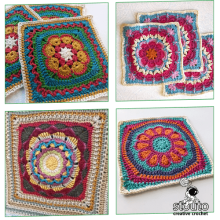
Granny squares are versatile motifs used in a wide range of crochet projects.
Beginner crochet projects focus on basic stitches and simple construction.
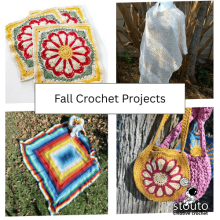
Fall crochet projects focus on warm textures and seasonal colors.

Explore More Popular Crochet Patterns You’ll Love

If you enjoyed this pattern, be sure to explore some of our other most-loved crochet designs.

From textured granny squares and patchwork flower motifs to beginner-friendly blankets and statement afghans, each pattern is created with clear instructions, step-by-step guidance, and practical yarn details to help you crochet with confidence.

Whether you're building a full blanket collection, creating a thoughtful handmade gift, or simply looking for your next relaxing project, you’ll find plenty of inspiration across our popular pattern pages.

Take a look around and discover your next favourite crochet project.

You will find the full list of crochet patterns on the Crochet pattern collection page.


Crochet Temperature Blanket Pattern – 365 Rows of Mixed Stitches

Looking for the perfect temperature blanket crochet pattern free PDF to keep you inspired all year long? This temperature blanket pattern is more than just another project , it’s a creative memory-maker. Designed as a 365 day crochet blanket, this beginner-friendly design lets you record daily weather changes in yarn, transforming temperatures into a beautiful mix of colour, texture, and personal meaning.

Stouto Creative Crochet Designer - Linda Slabbert

About the Designer

Hi, I'm Linda, the designer behind Stouto Creative Crochet. I create original crochet patterns inspired by colour, texture, and the joy of handmade crafts.

Each pattern is personally designed, written, tested, and photographed to provide clear instructions and an enjoyable crochet experience. My goal is to help crocheters of all skill levels create beautiful projects they can be proud of.

Discover more crochet patterns, tutorials, and creative resources from Stouto Creative Crochet.

Meet the Designer

LoveCrafts
Free Crochet Designs Crochet Designer in Partner Program
Copyright © 2018-2026 Stouto Creative Crochet